


A look forward
- thebombersblog

- Feb 3
- 25 min read
A Preview of the Preview.
If you’ve read my reviews of Essendon’s 2025 season, you’ll already have a clear sense of what I felt worked on field and why, and what didn’t, especially in the period where the side had its best chance to reveal its true potential before injuries became an insurmountable obstacle.
Now, as the focus shifts to 2026, I want to explore what Essendon should continue building from last season, as well as the key areas that once again demand improvement.
While it was an extremely difficult year for all supporters, there were genuine steps forward in certain aspects of the game. But more exposure is needed to determine which of those elements are truly viable and reliable, and as everyone saw at various points, there remain obvious gaps that still need to be addressed if the team is to compete consistently for longer periods.
In this piece, I’ll outline the parts of Essendon’s game that require refinement, the areas where improvement is essential against the better sides, and importantly, what those changes might look like in practice.
The aim is to map out what the Bombers need to move beyond hope and promise, and towards sustained, long-term success.

📸 Photo by Hunter Nield via Wikimedia Commons / CC BY-SA 2.0
The fixture.
Breaking the fixture into sections is how I usually assess the season ahead, and it mirrors how the coaches and high-performance staff approach their planning. The layout of the year influences almost every decision made across the football department.
For the coaches, it can define what late preseason planning can look like in order to suit early opposition likely lineups and game styles, while the middle blocks can be centred around experimenting with different combinations to help find the cohesion that finally builds into the latter part of the year, where hopefully everything is in order, minimal change is required in all aspects of the game, and player and list-management decisions have mostly been made so the ideal setup can push for immediate or future finals success.
Six months of waiting and thinking.

📸 Photo by 4TheWynne via Wikimedia Commons / CC BY-SA 4.0
There will have been no bigger build-up to a Round 1 game in recent memory, with the Merrett/Mitchell saga ensuring the season opens with fireworks, followed by a nine-day break before travelling to Adelaide to face Port.
The first five games offer a genuine opportunity to build confidence and immediately highlight which aspects of the game can progress. Only one opponent is a 2025 finalist, though the Western Bulldogs had the profile of a side capable of qualifying.
The following five games present a significant challenge and an important marker, testing an extremely young list in both experience and games played. All five are against 2025 finalists in Gold Coast, Collingwood, Brisbane, GWS and Fremantle, with two interstate trips against the Suns and Giants.
As the halfway point of the season approaches, what is learned from those five games against sides expected to again feature in the top eight, both the positives and the negatives, should provide ongoing motivation heading into the next six matches. All six opponents finished in the bottom eight in 2025.
The first four of those come against Richmond, West Coast, Carlton and Melbourne before the Bombers reach their mid-season bye, with North Melbourne and St Kilda the two opponents that begin the final seven games of the year and lead into the toughest stretch of the season.
Acknowledging and accepting what needs to improve, without placing a ceiling on what can be achieved, will be critical as Essendon heads into the middle of winter and what has, especially in recent campaigns, become their downfall: the last third of the season.
Return bouts against Brisbane, GWS and Hawthorn await, followed by Adelaide and Geelong, with this run set to clearly show where the Bombers sit in 2026 with only two games remaining.
Across the final 11 games, Essendon travels away from home ground Marvel or the MCG just twice, with the now-familiar trip down the highway to Geelong in Round 22 the only journey after Brisbane in Round 18.
While finals still look unlikely in what shapes as another highly competitive year at the top end of the ladder, with the consistently strong teams expected to feature again, Essendon being capable of occupying a spot in the middle tier isn’t unrealistic, particularly if they can rediscover more of their early-2024 form, see natural improvement from second- and third-year players who have already tasted senior football, and build a more reliable output from the 50-plus-games experience bracket.

Best 23.
By the midway point last season, the year had begun to unravel under the weight of injuries and constant changes to the team.
For 2026, one of the simplest but most important goals, with a little luck, will be having the best possible choices available for selection each week.
There should be very few walk-up starts when teams are announced on Thursday nights this year, with almost every position and role to be earned through form and consistency.

The back half.
The return of the two key posts down back in Ben McKay and Zach Reid, who managed just 10 games together last year, should provide a defensive structure to build around. Beyond them, however, the remaining four to six spots appear very much up for grabs.

📸 Photo by The Caddy Shack @CharlieDons on X. Used with permission.
Mason Redman looks next in line after stepping up through the second half of 2025 as injuries mounted around him, while Jordan Ridley’s situation looms as one of the more important considerations. If he can put concerns around durability behind him, questions will be asked of the match committee around how the overall balance of the defence should look.
Andrew McGrath was redeployed into the midfield across the final seven games last season, but with a full complement of onballers expected to be available in 2026, that move would, in my view, appear far less likely this time around.
Jayden Nguyen filled in for McGrath across the final five games, and with groundball versatility desperately required alongside what may be three to four talls, are he and Andy together the ones who add that balance?
Finishing runners up in the best and fairest in just his second year of football highlighted the early trajectory Archie Roberts is on. He ranked second among Essendon defenders for groundball wins last season, behind only McGrath, so his value is undeniable when the contest is up for grabs.
With multiple methods of ball movement required for an effective transition game, Zak Johnson is another who shapes as having significant upside.
His kicking, paired with an ability to spot teammates in dangerous areas, adds a layer that is difficult to ignore when assessing defensive options.
After only turning 18 in December 2024, the first-year recruit added much-needed polish in defence, though personally I would prefer to see his strengths utilised further up the field, an area I will cover in more detail later.

📸 Photo by The Caddy Shack @CharlieDons on X. Used with permission.
Saad El Hawli has spent the preseason developing as a rebounding defender after showing early promise on the wing late in 2024 and across 2025.
His education has been centred on taking the game on with run and carry, with a clear emphasis on using his genuine pace behind the ball.
Kayle Gerreyn appeared to be drafted as a forward who could pinch-hit in the ruck, but by the midpoint of 2025 he was redeployed in defence, where he has continued to work on his craft this preseason.
With questions around durability among Essendon’s key defenders, Gerreyn should be asking himself why it can’t be him to step up, not just as a short-term option, but as a longer-term answer.

📸 Photo by The Caddy Shack @CharlieDons on X. Used with permission.
Lewis Hayes is unlikely to be available until later in 2026 as his rehabilitation continues. While there must still be a focus on Nik Cox’s long-term health, his versatility could see him used at both ends of the ground, though his preseason to date suggests his most promising role is a return to the wing, recapturing the form shown early in his career.
Out wide.
Moving further up the ground, while also expected to provide support in the defensive half, the wing roles for 2026 appear a little clearer when it comes to weekly selection.
Brayden Fiorini fits immediately, bringing three key assets, one measurable and the others less so, experience and leadership.

📸 Photo by The Caddy Shack @CharlieDons on X. Used with permission.
With a young and developing list heading into 2026, Fiorini’s early career at Gold Coast offers useful context.
Drafted in 2016 as a 19-year-old into a list at a similar stage of its build to where Essendon now sits, he was forced to quickly learn what being a professional footballer demanded through day-to-day training and lifestyle. Those lessons now allow him to pass on standards and habits to the next wave of Essendon youngsters, something that feels particularly valuable right now.
As a winger, he also brings a natural defensive element to his game, along with the work rate required to get from contest to contest, which will need to be a priority if the ball movement changes undertaken so far are to be fully implemented.
With greater confidence in his body after playing 22 games last year, the first time he has reached that mark since his debut season in 2019, Xavier Duursma finally repaid the club’s patience.
Two years on, he appeared a lock to continue as one of the hardest runners on the list, combining his work rate with reliable positioning within the team structure. Instead, his preseason has been spent forward, a role he knows well from his time at Port Adelaide.

📸 Photo by The Caddy Shack @CharlieDons on X. Used with permission.
Jaxon Prior took time to find his feet in a backline that was required to do far too much early last year. As teammates fell around him, he increasingly proved his worth by competing above his weight and size.
After assessing his first year on the list, the coaches have identified his potential as a distributor, particularly through his penetrating foot skills, and have spent valuable time developing those assets in a role that is becoming increasingly important in the modern game.
In just his first 2km time trial during his first week at training, Angus Clarke has shown similar, if not better, traits than his more experienced teammates have to play on the wing.
With his first year under his belt, Clarke gained valuable insight by being required to step in as a defender. That education has continued over the past three months leading into 2026, adding another string to his bow as a potential starting position, which can only aid him when opportunities arise this season.
With a plethora of forward and midfield options on the list, rotations will likely see some players spend time on a wing, as was the case late last season with Kyle Langford and for much of the past 18 months with Harrison Jones. That said, both are better suited elsewhere, and it would be disappointing to see either used in that capacity regularly.
The middle.
Significant list turnover in recent seasons has reshaped this part of the ground, opening opportunities for players who now need to prove they are, or can become, the answer in an area that has lacked balance for some time.
Jye Caldwell showed in 2024 that his best asset was at the coalface of pre-clearance contests, with his ability to win groundball and feed teammates on the outside.
After surgery delayed his 2025 preseason, he’ll once again be looking to re-establish that role, alongside a new draftee and several others who enter the season without contracts for 2027.

📸 Photo by The Caddy Shack @CharlieDons on X. Used with permission.
Last preseason appeared to be shaping as a breakout for Elijah Tsatas, with opportunities opening through Caldwell’s injury. However, an early setback after two senior games and ongoing difficulty adding other required elements to his game resulted in another season of development at VFL level.
If his career is to take the next step and earn an extension, that progression will need to occur this year.
Finding the right balance between inside and outside midfielders is critical when going head to head with the best onball brigades from the Lions, Suns, Dogs and Dockers.
If Darcy Parish can put a horror two seasons behind him, he can complement Zach Merrett and help cover the loss of Nic Martin as a transition, handball-receive option, adding genuine threats through positioning and work rate.

Sam Durham’s rise as a midfield option over the past two seasons surprised many, though likely not himself given his approach, attitude and application. There is no reason that trajectory cannot continue into 2026.
While every Essendon fan appreciates what he brings every time he hits the contest around the ground, for mine, his best weapons should be utilised for longer periods further forward, with midfield bursts used more selectively.

📸 Photo by The Caddy Shack @CharlieDons on X. Used with permission.
The list profile is evolving, with delistings of players who haven’t proven they can both contribute to ball movement and impact the scoreboard.
Archie Perkins now must show who he is and what he can offer, as he remains unsigned beyond this year.
He has shown glimpses of his abilities, but inconsistently across his career—can he now deliver a more complete mix in both roles?
Will Setterfield’s role shifted significantly in 2025, becoming a more defensive presence in a midfield group that previously leaned too heavily on ball hunting.
That adjustment helped nullify the opposition’s clearance effectiveness and efficiency, but it seemed to tip too far in that direction.
With improved injury luck and more natural ball winners alongside him, Setterfield can again become a valuable piece in a more balanced onball mix.
Rucks.

📸 Photo by The Caddy Shack @CharlieDons on X. Used with permission.
Essendon heads into centre bounces having lost two ruckmen over the offseason with a combined 23 years of senior AFL experience.
In the early stages of 2026, that loss is being covered by two options with less than two years of senior exposure, alongside the assistance of a key forward who looked to rediscover the form that earned him a best and fairest in 2022.
All of this is required to hold the fort while a teammate who has played just 23 games across his first five seasons works his way back from an ACL injury.

📸 Photo by The Caddy Shack @CharlieDons on X. Used with permission
This area of the ground carries the biggest question mark for me, not just in what Lachie Blackiston and Vigo Visentini can offer in covering Nick Bryan’s absence, but in how effectively they can limit the influence of their direct opponents.
It’s not only about their own ball-winning or follow-up work, but whether they can prevent opposition ruckmen from dictating stoppages, giving their midfielders first use, or impacting around the ground.
For all of Sam Draper’s yearly challenges with fitness, continuity, and consistency, one reliable element of his game was how he influenced his direct opponent, whether at stoppage in the air, at ground level, or when used forward to disrupt intercepting defenders. That responsibility now falls primarily to Blackiston and Visentini, with Peter Wright expected to provide relief at times. This may also assist in structuring the tall forwards alongside the smalls inside 50, particularly with the rule change that replaces the substitute with a permanent 23rd player available throughout games.
The front half.
For a long time, I’ve bemoaned the midfield list being built with a poor mix of “same types.” While a move toward better balance is now beginning to take shape, even if there is still work to be done in my view, the area that has taken over as my primary concern sits forward of centre.
There is now a glut of similar forward types, with minimal variety in roles or profiles. Of those options, seven remain unsigned beyond this year, so if there was ever a time to put your hand up and define a role, it’s now.
Isaac Kako showed last season why he was considered the best small forward available in the 2024 draft. His consistency stood out, but just as importantly, his output improved as his first year went on.
Playing every game, one of only four Essendon players to do so and one of just three first-year players competition wide, he now enters 2026 with the opportunity to not only continue that form, but take it to another level with more responsibility and chances closer to goal.

Six forwards with varying levels of experience were delisted at the end of 2025, underlining just how ruthless the demands have become within the structure.
The expectation now is to contribute further up the ground while still impacting the scoreboard inside 50.
Matt Guelfi is one of four players of this type who remain unsigned beyond 2026, all competing to make this demanding role their own as the list continues to evolve.
Jade Gresham was expected to build on his groundball winning strengths after his final season at St Kilda and his first at Essendon. Instead, it was the much younger Kako who set the benchmark for work rate and execution. With another small forward option added through last year’s draft, Gresham enters the final year of his contract needing to show he can contribute consistently alongside the next wave of talent.
Rhys Unwin and Archer Day-Wicks both received a brief taste of senior football, likely earlier than ideal based on where they were in their development. That experience, however, should prove valuable. With a clearer understanding of the physical and mental demands at AFL level, they now know exactly which areas require further work.
Both Archie May and Liam McMahon have had to take the long road to realise their AFL dreams, and with both rewarded for their efforts via the mid-season draft, they will be keen to continue proving their value and honouring the opportunity afforded to them, while still developing the other areas of their games.
Nate Caddy showed longer and more frequent flashes of his potential in just his second year of football. With his season cut short, there should be no ceiling placed on what year three might look like. He certainly won’t be setting one for himself, and that attitude and ambition are part of what excites supporters heading into 2026.
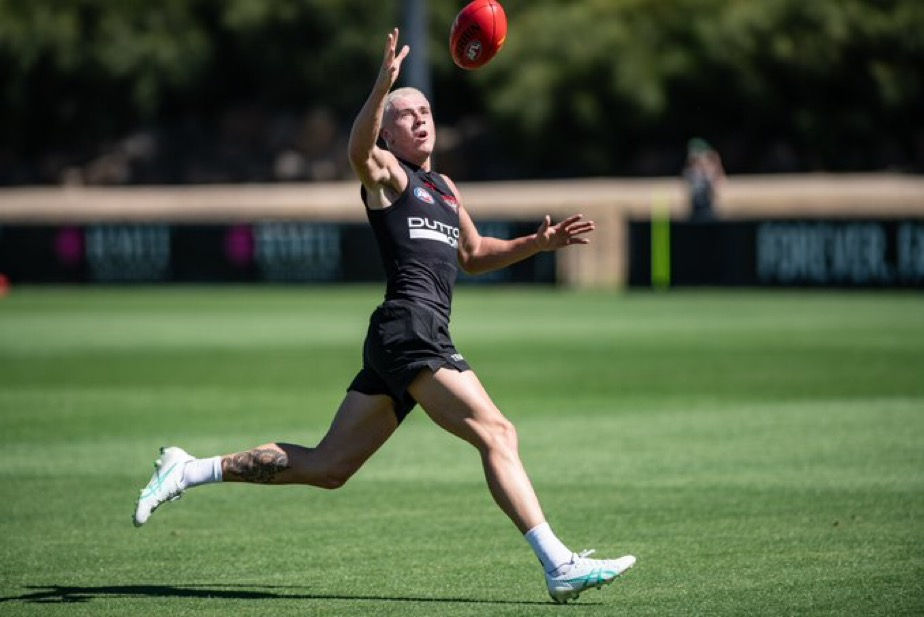
Confidence, largely impacted by injury, appeared to play a role in Peter Wright not matching his 2022 Crichton Medal–winning output across the following two seasons.

📸 Photo by The Caddy Shack @CharlieDons on X. Used with permission.
A return to form in the air last year should be a key driver for 2026 and, with improved accuracy to reward both himself and his teammates in front of goal, along with the rule change outlined earlier, he may spend more time inside 50, giving him a chance to get back to the 50-plus goal output with 62 per cent accuracy from four years ago.
Kyle Langford and Harrison Jones have both been required to adapt their roles at different times to accommodate structural needs inside 50.
Langford’s broader experience across the ground has helped in that adjustment, while Jones has been forced to learn on the job over the past season and a half, though both appear better suited as forwards.
Langford’s 2024 season remains a clear indicator of his capabilities, while Jones continues a slower build back after a serious injury ended his season prematurely. Alongside supplementary selection Tom Edwards, he should be afforded time to rebuild confidence in his body, with the aim of pushing for selection later in the year and adding further pressure for spots.
The additions.

📸 Photo by The Caddy Shack @CharlieDons on X. Used with permission.
My detailed breakdown of the five new recruits’ key skillsets, and what that might mean for Essendon moving forward, can be found here:
While expectations need to be tempered early in their careers, all five have been selected with specific roles and traits in mind, and should attack their first seasons accordingly.
Jacob Farrow and Max Kondogiannis both add depth behind the ball and have shown encouraging signs with ball in hand through the early part of their first preseason.

📸 Photo by The Caddy Shack @CharlieDons on X. Used with permission.
Farrow appears the more likely of the two to push for senior opportunities in 2026, with his vision, execution, and decision-making qualities that every list needs, and that Essendon in particular has lacked.
Sullivan Robey adds midfield traits to the front half, with his junior profile built around contest and scoreboard impact. Over time, that combination will apply pressure to players already on the list who have accumulated 50-plus games without fully cementing their place.
Hussein El Achkar need only look at Isaac Kako’s first season as a clear example of what is possible, with his fellow NGA product’s path serving as motivation.

📸 Photo by The Caddy Shack @CharlieDons on X. Used with permission.
For a truly modern forward setup, Kako needs support at his feet, and if El Achkar can build steadily into the year, late-season opportunities should not come as a surprise.
Very rarely does an 18-year-old midfielder look physically and mentally ready to step straight into an AFL best 18, but Dyson Sharp fits that description.

📸 Photo by The Caddy Shack @CharlieDons on X. Used with permission.
His credentials mark him as a ready-made onballer and future leader.
With his appetite for the contest and attitude towards the hardball, he is expected to support Durham, Caldwell, and Setterfield early, gradually assuming more responsibility inside as the season progresses, allowing others to thrive on the outside.
Cillian Bourke arrives from Ireland as a Category B rookie, and with the AFL recently extending the allowable time on that list to five years for players with fewer than 10 senior games, expectations will be tempered as he takes his first steps in an elite environment.

The coaches box.
While roles on the field are up for grabs for almost all 44 players on the list, decision-making upstairs presents its own challenge.
Selecting the most versatile and balanced lineup each week will test the coaching group just as much as the competition for spots does the players.
That balance must do more than simply complement the teammates beside them. It also needs to account for what opposition teams are likely to throw at Essendon, both in setup and system.
With the current list profile shaped over the past two seasons through draft and trade decisions under Matt Rosa, the coaches must trust they have the tools to adapt week to week, whether matching the small forward threats of Hawthorn, Brisbane and Fremantle, or holding up against the key tall structures of Adelaide, the Western Bulldogs and GWS, while staying aligned with what Essendon wants to achieve with its opportunities.

📸 Photo by The Caddy Shack @CharlieDons on X. Used with permission
Without the footy.
Team defence has been a long-standing weakness for the Bombers, and this is where a structural reset is required.
Dean Solomon steps down from the boardroom into a hands-on role, bringing his experience and past expertise to improve mindset, contests and positioning behind the ball. Supported by David Rath’s influence on game strategy, the focus will be on limiting the end-to-end transition football that has left the back six exposed for far too long.

📸 Photo by The Caddy Shack @CharlieDons on X. Used with permission.
Essendon’s defence still has a way to go before it can reliably win, or at least halve, one-on-one contests against the competition’s best forwards. That said, there were genuine glimpses in 2025 of what Zach Reid and Ben McKay could offer together as intercept defenders.
With greater availability and stability in the players around them, that partnership should benefit from sustained time together, allowing the backline as a whole to develop a clearer understanding of simple concepts like when to come off a direct matchup to cover a teammate and when to trade up to attack the ball carrier, just as Adelaide, Geelong and Hawthorn were able to do last season.
That continuity, combined with Solomon’s education to improve the players’ ability to switch from attack to defence mode in order to relocate an opponent, as well as the basics of communicating with one another, not just with the high ball but at ground level, will bring enormous benefits.
But defending starts well before the ball reaches the back third.
One of Essendon’s most damning issues in 2025 was how easily opponents were able to transition the ball from one end of the ground to the other.
Far too much territory was given away from turnovers, intercepts and clearances originating in the front half, allowing opposition rebound chains to travel too far in the opposite direction. At the core of this problem was Essendon’s inability to defend uncontested possessions, particularly uncontested marks.
Show any weakness to the other 17 clubs and opposition analysts will quickly take note and find ways to exploit it.
The control game was one such area, with teams recognising how to expose Essendon’s structure when forced to defend possession.
When too much freedom is afforded through the middle of the ground, it places a heavier burden on standing up in defensive 50, with too much responsibility falling on the last line of defence to prevent chains ending in a score.
The past mix of zoning, man-on-man, and fold-back defence requires immediate improvement through training, something that has clearly been a focus throughout the preseason, alongside higher accountability and standards.
Once the game moves out of congestion and into open space, defending uncontested possession must improve if the Bombers are to take a meaningful step forward.
Last year, mainly early, saw Essendon shift toward a more contested brand of football. If they are serious about a chaos-based game style, they must not only play that way themselves but also force opponents into it far more often.
Stoppage.
With the introduction of the last-touch rule between the arcs in 2026, the natural expectation is that stoppages in this area will reduce.
In 2025, there were on average around 20 boundary throw-ins per game in this zone, alongside roughly 0.5 insufficient intent free kicks paid. AFL modelling suggested boundary throw-ins would drop by approximately three per game, while 0.3 of existing insufficient intent decisions would instead be replaced by last-disposal free kicks.
Even with those adjustments, the adapted numbers still point to an average of roughly 67 stoppages per game, bringing totals back in line with 2023 and 2024 levels. More importantly, last season’s finals series highlighted how significant clearance can be at the pointy end of the season.
Across the home-and-away season, close to 30% of scores originated from clearances, with the remaining majority coming from turnovers.
In the finals, the balance shifted, with clearances accounting for 47% of scores overall, and across the final five games of the season — the two semi-finals, two preliminary finals, and the grand final — more than 60% were sourced this way.
Stronger teams can often punish lesser opponents through their inability to defend turnovers and maintain consistent structures. But when the best face the best, moving the ball end to end becomes far more difficult, placing greater importance on the territory gained at stoppage.
Last season showed that while Essendon could compete at stoppage in patches, particularly early, relying on one or two midfielders to win first possession and convert it cleanly was not sustainable against the best sides.
Greater rotation onball is required in 2026.
Darcy Parish’s return to full fitness is an obvious boost, while Jye Caldwell returning to the more consistent availability he showed from 2022 to 2024 should add stability.
Dyson Sharp’s expected introduction into the starting group, based on preseason exposure, further supports Zach Merrett, Sam Durham and Elijah Tsatas in winning hard ball, feeding runners on the outside and, in turn, getting better value down the line.
How that mix settles will be one of the more interesting watches this season.

📸 Photo by The Caddy Shack @CharlieDons on X. Used with permission.
Essendon’s preference last year to support the source with extra numbers meant handball was the primary method to exit congestion. Too often, however, the balance between inside and outside support, combined with opposition pressure around the perimeter, exposed a lack of consistent decision-making and execution. The result was an over-reliance on handball and turnovers occurring too close to the contest.
Finding a better balance between kick and handball, while also improving defensive work without the footy closer to goal, will help protect the backline and create more opportunities to score from intercept in the front half.
A lot of criticism was directed at Essendon’s front-half game in 2024, particularly repeat inside 50 entries that failed to generate maximum return. The issue, though, wasn’t entirely the repeat entries themselves, but the method used to get the ball there in the first place.
Game style.
Early last year showed signs of a shift in the team’s ideology and method compared to 2024, with the game built more around not only supporting the source with numbers, but then exiting by hand to generate run, rather than kicking its way forward.
After injuries took too big a hold from the midway point on, the approach became a messy mixture of the early-season style and the contrast of going longer, much more direct by foot than in recent years, something that now looks set to be the default for 2026 based on preseason training.
Pre-Christmas training drills have focused on speeding up decision-making — both in who to move the ball onto and how to do it — and once that choice is made, it is going much further downfield.
It is a simple, uncomplicated game style in theory, but one that places significant demands on the group — decision-making first and foremost.

📸 Photo by The Caddy Shack @CharlieDons on X. Used with permission.
The game should be noticeably faster and, in turn, more chaotic, forcing players to quickly identify the correct lane of attack, with teammates reading the same cues.
Runners must assess where support is ahead of the ball, or whether a change of direction is required, provided teammates have already worked to that side as a viable option.
If a change is required, the next phase must include taking territory immediately, by run and carry or by going long with kicks that allow players ahead of the ball to best use the space created.
If the assessment is instead to go straighter, it demands a reliable forward structure with even numbers.
That gives the ball carrier a consistent reference point, knowing they will at least get a contest and, at worst, bring the ball to ground rather than have it intercepted in the air.
From there, support must arrive at the drop, ideally outnumbering the opposition.
With less congestion, players are given room to show their strengths in leg speed, work rate, and the ability to force defenders into difficult decisions: support the contest or stay locked to their opponent. Repeatedly putting the opposition in those moments is where pressure can turn into opportunity.
Teams that have used variations of this approach with success include Adelaide, Collingwood and Gold Coast last season, Geelong and Port Adelaide in previous years, and Richmond throughout their premiership run. A quick footnote: this approach does not guarantee success on its own, as many elements combine to make it effective.
Chief among them is fitness.
The best teams have consistently had the capacity to get from contest to contest to support teammates ahead of the ball,
something Essendon clearly prioritised pre-Christmas through a heavy running focus.
Finals football revolves around contest, and having more players able to “get over” to help teammates than the opposition the longer the game and season goes on separates the best from the rest. But so does each player’s ability to stand up on their own.
Quicker ball movement, whether from stoppage or in transition, should naturally create more one-on-one contests — aerially for the talls and at ground level for the smalls. Now you really get to see what the list can achieve.
Give Caddy the chance to use his athleticism in space to exploit someone who cannot match his turn of foot or leap.
Allow Wright to take the ball at its highest point and outreach the key defender without any support from a “third man up,” and provide Kako a paddock to use his sidestep and quick feet to “turn around” the small defender in the most dangerous parts of the ground.
Now that they’ve been given the best chance to succeed, it’s about making it count.

📸 Photo by The Caddy Shack @CharlieDons on X. Used with permission.
Efficiency.
An overhaul in system with the football is only complete if that work can be transferred onto the scoreboard through finishing skill, and Essendon must continue shaping its list and weekly selections with that in mind.
Over the past three years, 15 players have been moved on who spent significant time forward at senior or VFL level, many of whom struggled either with execution in front of goal or with delivering consistent impact in the front half. Too often, the side’s inability to reward work done further up the ground from stoppage or intercept at crucial moments has let it down.
For mine, there’s talent on this list to extract maximum value at the end of the possession chain.
There is no doubt Nic Martin will be sorely missed forward of centre.
His ability to find or direct teammates into space through his vision and kicking, combined with his own scoreboard impact, is a genuine asset. However, with greater depth emerging both onball and down back, positional changes elsewhere can help cover that loss.
Sam Durham is an obvious candidate.

📸 Photo by The Caddy Shack @CharlieDons on X. Used with permission.
All Bomber supporters appreciate his appetite to attack the man pre-clearance, but his polish on the outside within 70 metres of goal brings greater value.
His contest-winning ability in this zone brings teammates into the game more often, while his aerial strength demands a defender with genuine versatility. In a more open game, his 15 to 20 possessions in this area are far more damaging than 25 to 30 further up the ground.
Zach Merrett is another natural fit.
His precision kicking inside 50, with forwards afforded more space to lead in and out, along with his ability to shift angles of attack, should be central to Essendon’s next phase of progression.

📸 Photo by The Caddy Shack @CharlieDons on X. Used with permission.
Both Merrett and Durham also bring natural defensive pressure and tackling as part of their makeup, as does Xavier Duursma.
Accuracy in front of goal remains non-negotiable, and having a player who has kicked at better than 70 per cent over the past four seasons given more opportunity closer to goal is simply a smart move.
While those three are the obvious candidates to put the finishing touches on everything that happens before them, there is scope to look further.
Improving forward-50 efficiency through ball retention and marking will be just as important.
Zak Johnson, in particular, having 15 kicks in the front half is an appealing thought.
His tendency to lower his eyes rather than bomb long, combined with his desire to keep possession and follow up with a handball receive, will force defenders to stay accountable.
KPI’s
Rather than anchoring expectations to ladder position alone, these indicators consistently separate finalists from the rest of the competition.
They capture repeatable processes that reflect efficiency and effectiveness in systems with the football, while also highlighting structure and discipline without it.
-Intercept to shot at goal strike rate (for and against)
By season’s end last year, all but two finalists were converting one in every five intercepts into a scoring shot. By the end of the home-and-away season, the top nine sides all finished with a positive differential, with five of the top six progressing to the second week of finals.
-Scores from turnover (for and against)
The top nine teams at the end of the regular season all ranked inside the top nine for points-from-turnover differential. Each averaged 48 points or more from this source while conceding no more than 45 the other way.
-Clearance to shot at goal strike rate (for and against)
All 2025 finalists generated a shot at goal from a clearance at a rate above 24%. Defensively, three of the top four teams at preventing stoppages from resulting in scores would go on to play in preliminary finals.
-Opposition defensive 50 to forward 50 chains
Brisbane was the only finalist to rank worse than the AFL average in allowing opponents to transition from defensive 50 to forward 50 in 2025.
-Possession chains to shot at goal strike rate (for and against)
GWS was the only finalist to allow chains to end in a shot at goal at a rate worse than the AFL average of 20.8%.
-Marks inside 50 rate (for and against)
Geelong, Hawthorn, and Collingwood all found marking targets inside 50 at a rate of 24% or higher by Round 24, the top three teams in this category. Defensively, six finalists held opponents below 22%.
-Scores from the front half possession chains
Six finalists finished the season with a positive differential, with three of the four preliminary finalists ranked inside the top four for this metric.
-Scores from back half position chains
Only Collingwood recorded a negative differential among the top eight heading into the first week of finals.
-Opposition possessions per intercept
The top five teams in this category all played finals, with three of the top four advancing to preliminary finals.
-Opposition possessions per uncontested mark
Five of the top six ranked teams qualified for finals.
-Opposition kicks per intercept mark
All of the top five teams in this measurement played finals, with four of those progressing to preliminary finals.
-Post-clearance contested possession differential
Only two finalists finished the home-and-away season with a negative differential.
-Opposition groundball wins versus marks (chaos versus control)
Six finalists forced their opponents to win more groundball contests per game than take marks.
Final thoughts.
Now entering the fourth year under this regime, the list profile that needed to change to sustain success not just across 15 weeks, but across 25 and beyond, must begin to show more than isolated signs of progress. What should emerge in 2026 is a framework that more closely resembles a finals-ready brand of football.
Additional contested ball-winning strength has been added to the list, aligning with the stylistic shift shown throughout the preseason in how Essendon looks to attack with ball in hand.
Even with the list still the second youngest by age and the third youngest by games played, there should be no artificial ceiling placed on what can be achieved in 2026.
Of course, new additions still have levels to reach, and how quickly they progress will depend on the coaches’ ability to extract consistency and growth. But for those already embedded in the system, the expectation must now shift from development to responsibility.

I won’t be governed purely by wins and losses, at least not initially. If the underlying processes improve, even in small ways, then the foundations for long-term success are being laid. How quickly that translates against the other 17 teams is in Essendon’s hands.
Go Bombers!
*Once again, big shout-out, appreciation, and credit to Charlie (Caddy Shack @CharlieDons on X) for his photos.
For more pics, Charlie can be found on X here:
Comments